Elevated view of a densely clustered informal settlement
Photo · Khanh Do / Unsplash
Scolah Compass
Technical Note · TN-2026-07
Systems Architecture Brief — Social Registry Interoperability

One Household, Six Records.

A technical brief on registry fragmentation and the case for a single deduplicated social registry hub — prepared for programme and information-systems leadership evaluating Scolah Compass as an interoperability layer across existing benefit and civil-registration systems.

Prepared for: Social Protection & IT Leadership Document class: Public · Rev 2026-07
Scolah Compass — Social RegistryFrontispiece
Problem Statement

Most social protection systems did not fail to register people — they registered the same people multiple times, in different systems, under different identifiers, with no shared source of truth. A household enrolled in a cash transfer programme, a health subsidy, and an education grant can exist as three unrelated records, each unaware of the other two. Reconciling that is not a policy problem. It is a data architecture problem, and it has a known solution: a canonical registry that every downstream system reads from and writes to.

SpecificationValue
Deployment ModelSingle-tenant registry hub; on-premises or government cloud
Data ModelHousehold → Individual → Case; canonical UUID identity keys
Integration Count6 upstream systems at reference deployment
Deduplication MethodDeterministic match with probabilistic fallback scoring
Sync PatternEvent-driven (pub/sub) plus nightly batch reconciliation
Access ModelRole-based, audit-logged, consent-scoped
Technical Note TN-2026-07Page 02 / 13
Scolah Compass — Social RegistryContents
Contents

This note is organized as a systems brief, not a proposal. Sections 01–03 describe the problem and the target architecture. Sections 04–06 describe how a deployment is actually built, governed, and started.

No.SectionDescriptionPage
01The ProblemWhy registries fragment, and what it costs in duplicate payment and audit burden04
02The ArchitectureHub-and-spoke deduplication model, with reference deployment topology06
03The Migration PathData mapping to cutover, phase by phase, with exit criteria08
04The ModulesSix components, technical capability by capability10
05Governance & Access ControlRoles, permissions, audit trail, consent scoping11
06Getting StartedReference deployment path and technical point of contact13
Technical Note TN-2026-07Page 03 / 13
Scolah Compass — Social Registry01 · The Problem
01 / The Problem

N Registries, One Population.

Business handshake between two people in an office in Nairobi, Kenya

1.1 Fragmentation by design

Cash transfer, health subsidy, education grant, and disaster-response programmes are typically commissioned separately, years apart, by different agencies, on different procurement cycles. Each ships with its own beneficiary list. None of them were built to talk to each other, because none of them were built at the same time, by the same team, against the same requirement.

1.2 The duplication tax

A household that appears under three unlinked identifiers is not three problems — it is one problem, paid for three times. Duplicate or stale records inflate disbursement totals, and reconciling them after the fact is a manual audit exercise, not a system function. Every duplicate that survives to disbursement is a payment that either goes to the wrong place or gets caught only by chance.

1.3 Why point-to-point integration fails

Connecting six systems directly to one another requires up to fifteen point-to-point integrations — each one bespoke, each one a maintenance liability, each one a new place for identity to drift out of sync. A hub-and-spoke model replaces that mesh with six connections to a single canonical registry: linear cost instead of combinatorial cost, and one place where "who is this person" is answered once.

6 systems, up to 15 potential point-to-point integrations in a fully-meshed model — or 6, through a single hub.
Technical Note TN-2026-07Page 04 / 13
Scolah Compass — Social Registry01 · The Problem (cont.)
Comparison

Same Population, Two Ways to Run It.

Nothing here is aspirational. Every row on the right describes a mechanism the hub actually implements, mapped against the operational reality it replaces.

Today — Fragmented Registries
No shared identifier across programmes; each system invents its own beneficiary ID.
Duplicate enrollment discovered only by manual, periodic audit.
Eligibility recalculated independently, and inconsistently, per system.
Disbursement reconciliation is a monthly manual export/import between systems.
Access logs, where they exist at all, are per-system and unlinked.
Onboarding a new NGO partner means a new one-off integration, negotiated from scratch.
With Compass — One Registry
Canonical UUID per household and individual, shared by every connected programme.
Duplicate candidates flagged automatically at the point of intake.
Eligibility computed once against the canonical record, consumed by all systems.
Disbursement reconciled continuously via event stream, with exceptions surfaced same-day.
Single audit trail — per user, per record, per action — across every connected programme.
Onboarding a new partner means one connector to the hub, not a bespoke integration.
Close-up of a hand signing a document with a fountain pen, Nairobi, Kenya
Fig. 2 — Consent capture at intake, one of the events the hub logs against a single canonical record rather than a per-system file.
Photo · Cytonn Photography / Unsplash
Technical Note TN-2026-07Page 05 / 13
Scolah Compass — Social Registry02 · The Architecture
02 / The Architecture

The Hub, Not the Spokes.

Every upstream system keeps its own database and business logic. What changes is where identity lives: a single deduplicated record hub owns the canonical household and individual graph, and every spoke system references it instead of maintaining its own copy.

DEDUPLICATED RECORD HUB Household · Individual · Case National ID Registry Health Subsidy provider system Education Grants Disaster Response Partner / NGO Systems Cash Transfer payment system
Real-time event sync — pub/sub, sub-second propagation of create/update/merge
Nightly batch reconciliation — full-extract compare against the canonical record
Canonical record — single source of truth; every spoke reads and writes against it, none maintains its own copy of identity
Technical Note TN-2026-07Page 06 / 13
Scolah Compass — Social Registry02 · The Architecture (cont.)
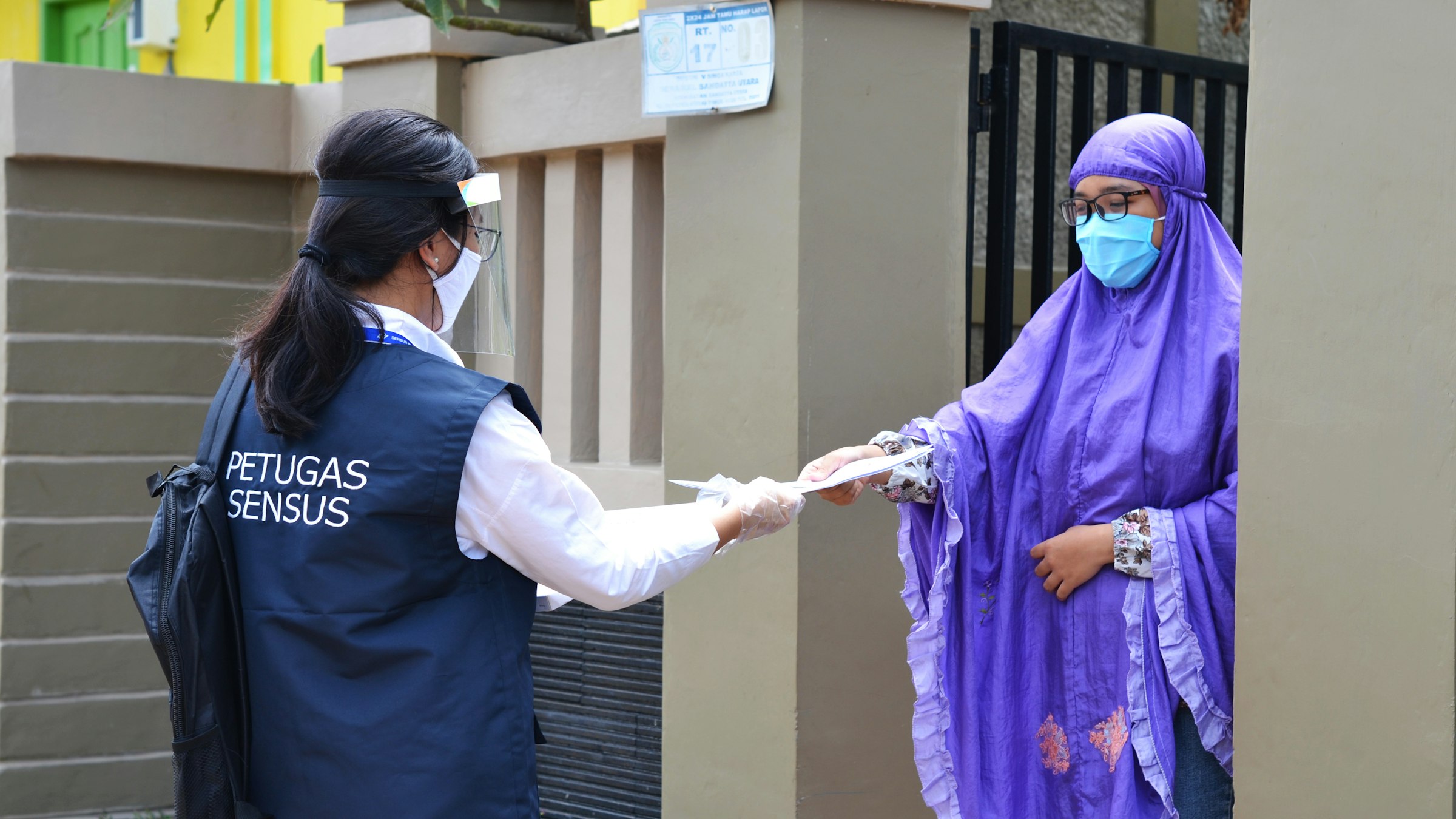
Census officer in PPE handing paperwork to a household member at her gate, Indonesia
Photo · Muhammad Abdul Majid / Unsplash

Fragmentation Is the Default, Not the Exception.

In most mid-size social protection systems, five to eight registries operate in parallel with no shared identifier. That is not a failure of any single system — it is the predictable outcome of programmes built independently, over years, by different teams.

A hub does not replace those systems. It gives them one thing none of them had on their own: a canonical answer to the question every one of them is separately trying to answer — who is this, and have we already seen them somewhere else.

5–8
Registries typically operating in parallel, unfederated
30–40%
Duplicate or stale record rates observed in unfederated audits
0
Shared identifiers across programmes, in the common baseline case
1
Canonical record, once a hub is in place
Figures are illustrative ranges representative of typical unfederated registry environments, not measured results from a named deployment.
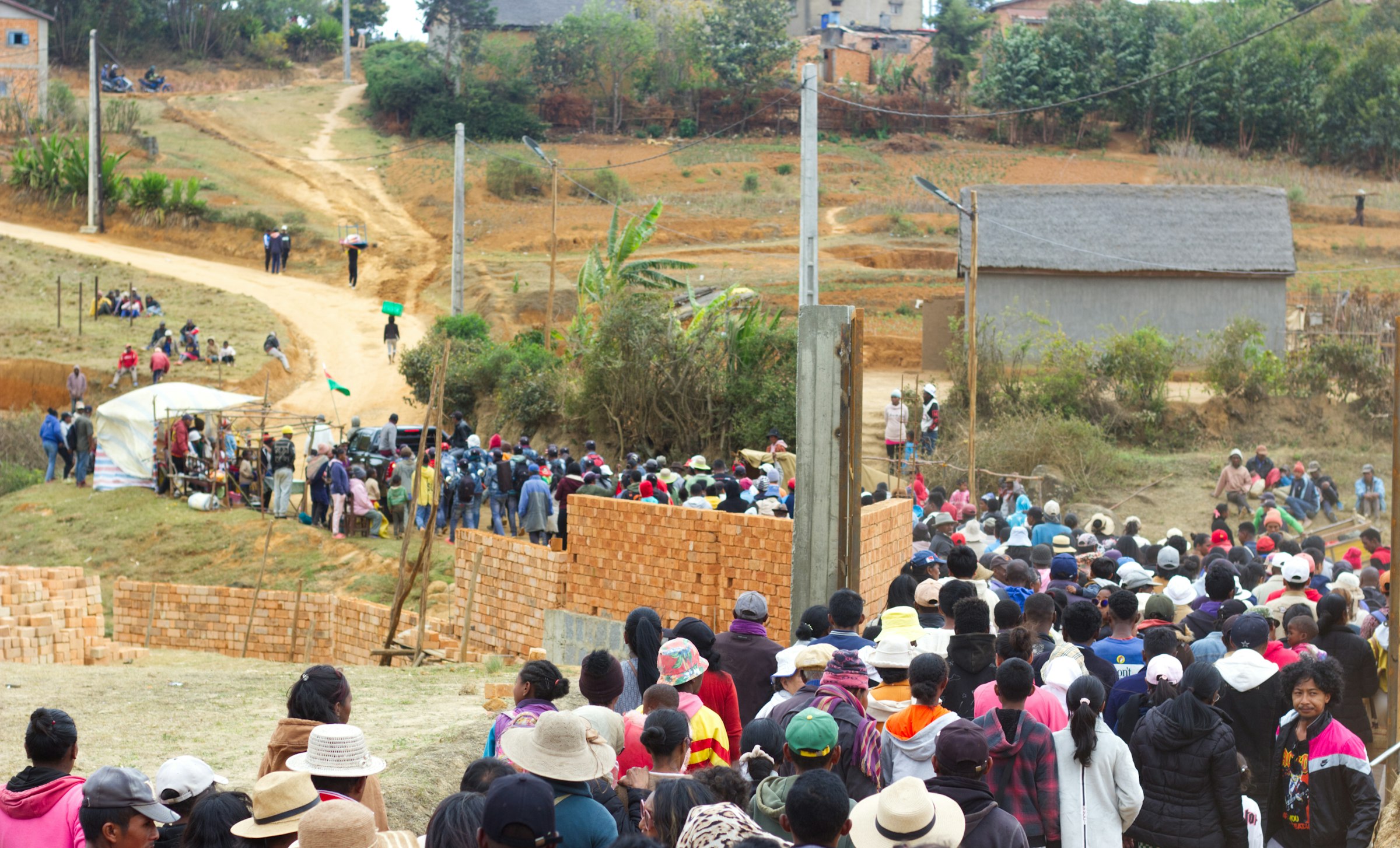
Large crowd gathered in a rural village setting in Madagascar
Fig. 3 — Community consultation ahead of a registry migration, rural Madagascar. Photo · Sitraka Mamy Tantely Andriamialijaona / Unsplash

Technical Note TN-2026-07Page 07 / 13
Scolah Compass — Social Registry03 · The Migration Path
03 / The Migration Path

From Six Files to One Cutover.

The hub is not switched on. It is grown into, in four phases, with an explicit exit criterion at each step — no phase begins until the previous one has been signed off.

PhaseObjectiveDurationExit Criterion
01 · Data Mapping Map each source system's schema to the canonical household / individual model; resolve field-level conflicts 4–6 weeks Field-mapping document signed off by every system owner
02 · Dedup Pass Run deterministic and probabilistic matching across all source extracts; generate merge / no-merge candidate list 2–4 weeks Duplicate rate below agreed threshold on sampled audit
03 · Parallel Run Hub operates alongside source systems, which remain the system of record; discrepancies are logged, not auto-resolved 6–8 weeks Reconciliation discrepancy rate stable and fully explainable
04 · Cutover Hub becomes the system of record; source systems switch to read/write against it via connector 1–2 weeks All programmes reading and writing the canonical record; legacy direct writes disabled
Office worker in Nairobi, Kenya entering data on a laptop

Fig. 4 — Field office data entry during the mapping phase, prior to hub cutover, Nairobi. Photo · Cytonn Photography / Unsplash

Technical Note TN-2026-07Page 08 / 13
Scolah Compass — Social RegistryReference Parameters
Reference Deployment Parameters

What a Reference Deployment Targets.

6
Upstream systems integrated at reference deployment scale — cash transfer, national ID, health subsidy, education grants, disaster response, partner/NGO systems.
<1%
Target duplicate-record rate remaining after reconciliation, down from a common unfederated baseline of 30–40%.
72hr
Typical reconciliation cycle time during the parallel-run phase, from discrepancy detection to resolution or escalation.
100%
Access events audit-logged — every read and write, attributed to a user, timestamped, no exceptions.
These are target architecture parameters for a reference deployment, stated for planning purposes. They are not measured outcomes of a specific, named engagement.
Technical Note TN-2026-07Page 09 / 13
Scolah Compass — Social Registry04 · The Modules
04 / The Modules

Six Components, One Registry.

Each module is independently deployable and independently versioned. Core is the only one every other module depends on.

MOD.01

Core

Canonical household / individual / case identity graph. UUID-keyed records survive registry merges and system replacements. Exposes REST endpoints and event streams (created / updated / merged) for every downstream consumer.

MOD.02

Intake

Multi-channel case intake — web form, mobile app, paper-batch scan with OCR fallback. Schema-validated at point of entry. Duplicate-candidate flagging runs synchronously against the hub before a record is committed.

MOD.03

M&E

Indicator pipelines and cohort tracking against the canonical population. Exports to standard donor reporting formats. Point-in-time snapshots for audit and evaluation, independent of any source system's retention policy.

MOD.04

Field

Offline-first mobile capture for enumerators without reliable connectivity. Conflict-free sync on reconnect; merge and last-write rules configurable per field.

MOD.05

Disburse

Generates payment instructions from eligibility decisions computed against the canonical record. Reconciles against disbursement-provider callbacks; flags mismatches for manual review rather than auto-resolving them.

MOD.06

AI

Matching and scoring assistance for duplicate-candidate review and anomaly detection on claims. Advisory only: any match above a configurable confidence threshold still requires human sign-off before a merge is committed.

Technical Note TN-2026-07Page 10 / 13
Scolah Compass — Social Registry05 · Governance & Access Control
05 / Governance & Access Control

Who Can See What, and Why.

Access is role-based and least-privilege by default. Every role below is scoped at the record level, not just the system level.

RoleScopePermissions
CaseworkerAssigned households / cases onlyRead; update intake fields
Programme AdministratorFull programme cohortRead; approve eligibility; no raw PII export
System Integrator (API)Fields declared in its connector contract onlyRead/write via contract; no UI access
AuditorFull registry, read-onlyRead; export audit log; no data modification
Data Subject (self-service, where enabled)Own household record onlyRead; request correction; view own access log
Audit Logging

Every read and write is logged with actor, timestamp, and a field-level diff. Logs are append-only and exportable independent of the record they describe.

Consent Scoping

Records are tagged with a consent basis per programme. Withdrawing consent from one programme does not remove a household from others unless explicitly configured to do so.

Technical Note TN-2026-07Page 11 / 13
Scolah Compass — Social Registry06 · Getting Started
"

We didn't need a seventh system. We needed the six we already had to agree on who a person was.

Illustrative composite
Head of Information Systems, National Social Protection Agency
Illustrative composite quote, representative of technical stakeholder feedback gathered across social registry engagements. Not attributed to a named individual or agency.
Technical Note TN-2026-07Page 12 / 13
06 / Getting Started

Start With One Connector.

Engagements begin with a registry assessment, not a contract for the full architecture. Most teams connect one upstream system first, validate the deduplication pass against it, and only then commit to a phased cutover across the rest.

  • 01
    Registry Assessment

    Mapping of existing systems, a duplicate-rate baseline, and a confirmed integration count.

  • 02
    Reference Architecture

    Hub design scoped to your existing systems, with a named, phased migration path.

  • 03
    Pilot Connector

    One upstream system connected and validated before any commitment to full rollout.

  • 04
    Governance Pack

    RBAC matrix, audit and consent model, packaged for procurement and technical review.

Technical Briefing
Solutions Engineeringcompass@scolah.com
Procurement
Partnerships Deskhello@scolah.com
Document
TN-2026-07Rev 1 · July 2026
Scolah Compass — Confidential Technical Note Page 13 / 13